Check what was understood
See the speaker, original text and translation. Review names, times and numbers before using the result.
Create a branded companion app for turn-taking conversations, reviewed captions and clear audio controls. We build the software and integrate licensed speech services, with earbud support scoped to specific devices.
Separate the user’s communication task from the brand’s reasons to invest in its own app.
Travel questions, trade-show introductions and visitor reception can all involve two languages. A useful experience coordinates speakers, source and target languages, captions and audio output throughout the exchange.
If the existing app already covers the core task, improve that journey first. A dedicated app should address specific product and service requirements.
Read the industry analysisSee the speaker, original text and translation. Review names, times and numbers before using the result.
Take turns with clear audio output. A disconnected headset should prompt a choice before playback moves to the phone.
Plan the app around supported models, service regions and customer journeys. Add entitlements or operations tools when justified.
Dedicated interpreters, platform ecosystems and audio brands make different product choices.
One-on-One, Listen & Play and Media organize distinct tasks. The earbuds work with the phone app; offline support depends on the mode and language package.
Hardware purchase connects users to companion services. Check current regional language-package and entitlement terms. A vendor feature is not automatically an available integration API.
Official product documentationOrganize entry points around communication tasks.
Language coverage, latency, pricing and supported modes are scoped to the selected services and tested devices.
| Approach | Best fit | Conditions to accept |
|---|---|---|
| Use an established product | Individuals and standard translation tasks already served by existing products. | Stay within the vendor’s device, region and service rules. |
| Integrate a speech service | Brands with an existing app and access to suitable licensed APIs or SDKs. | Review language coverage, regions, pricing and limits with the selected provider. |
| Build a branded app | A distinctive customer journey, record policy or device integration needs dedicated software. | Budget for device testing, recurring services and ongoing platform compatibility. |
Connect preparation, captions, correction and playback around a single conversation.
Make one conversation work well before adding every translation mode.
The proposed first release focuses on short Chinese–English exchanges: prepare, speak, review, play and optionally retain. Language pairs, audio policies and data handling follow the target market.
Set languages, check audio, take turns, review captions and manage saved records.
Manage identity, request revisions, cancellation and usage; call licensed recognition, translation and synthesis services.
Use the phone as the baseline. Test headset input, output, interruptions and reconnection for each supported combination.
Choose languages and review audio and processing rules before the exchange begins.
After connectivity returns, the user starts the next turn. Reconnection should not trigger capture or playback.
Reconnected does not mean resumedLicensed services handle language tasks. Your software manages permissions, versions and audio behavior.
Convert authorized audio into source text with its language. Validate accents, names and background noise with representative samples.
Translate the source into the chosen language. Source corrections create a new revision that people review for meaning and numbers.
Generate audio from the latest approved translation and send it through the selected audio route.
Validate mobile permissions, interruptions and playback first.
Select commercially licensed services for your languages and regions. Keep credentials and quotas server-side; evaluate quality with real samples.
Treat system audio and device-state protocols separately. Test supported phones, OS versions and earbuds for capture, playback and interruptions.
Relate sessions, utterances and revisions. Set necessary retention periods, access controls and deletion paths.
Review processors, processing locations and applicable cross-border requirements before selecting deployment regions.
Define the first release around short, in-person exchanges and measurable acceptance criteria.
Choose the language and audio route, then check important details in accommodation, transport and venue questions.
Phone audio first; headset support is model-specific.Discuss samples, quantities and preparation needs. Verify numbers and names; confirm contracts and delivery commitments separately.
Terminology support can follow; no automatic purchasing.Show language direction and intended output in Chinese–English reception. Retain text only under the agreed purpose and policy.
Define region, language and retention requirements first.Separate results by device, language pair and network conditions. Pair completion rates with failure reasons to prioritize improvements.
Track names, numbers and dates separately. Prioritize fixes by the consequence of errors.
Include hosting, maintenance and device adaptation. Calculate charges against the selected provider’s actual terms.
A branded app is justified when it creates a coherent link between the product, customer service and the brand relationship. Subscription, bundled access and usage entitlements need validation with the intended audience.
Agree on markets, languages, mobile platforms and earbud models. Review the existing app, sample hardware and integration rights.
Build language selection, captions, corrections, audio rules and optional retention. Evaluate licensed services on authorized samples.
Check permission flows, routing, calls and interruptions, timeouts and disconnection across the agreed device matrix.
Agree on samples and acceptance metrics. Review usability and recurring costs before adding languages, terminology or operations tools.
Yes. Our focus is companion software and backend integration. Earbud support depends on system audio capabilities, the model and available protocols or SDKs, and requires physical testing.
Support must be validated by model and operating system. Bluetooth pairing or a BLE state interface alone does not establish the recording and routing capabilities the product needs.
Those capabilities require separate reviews of model licensing, audio access and platform restrictions. This proposal starts with online, turn-taking conversations in person.
The first release centers on the app and essential service APIs. Add administration when there are concrete entitlement, configuration or operational tasks.
Your target markets, mobile platforms, initial languages, earbud samples, integration contact, existing app and retention requirements help us assess the software and audio scope.
Start with your market, earbud model and core conversation scenario to scope the app, speech integration and device work.
Related solutions
AI, capital-markets docs, OCR, vision, IoT and membership operations — composable for your industry.
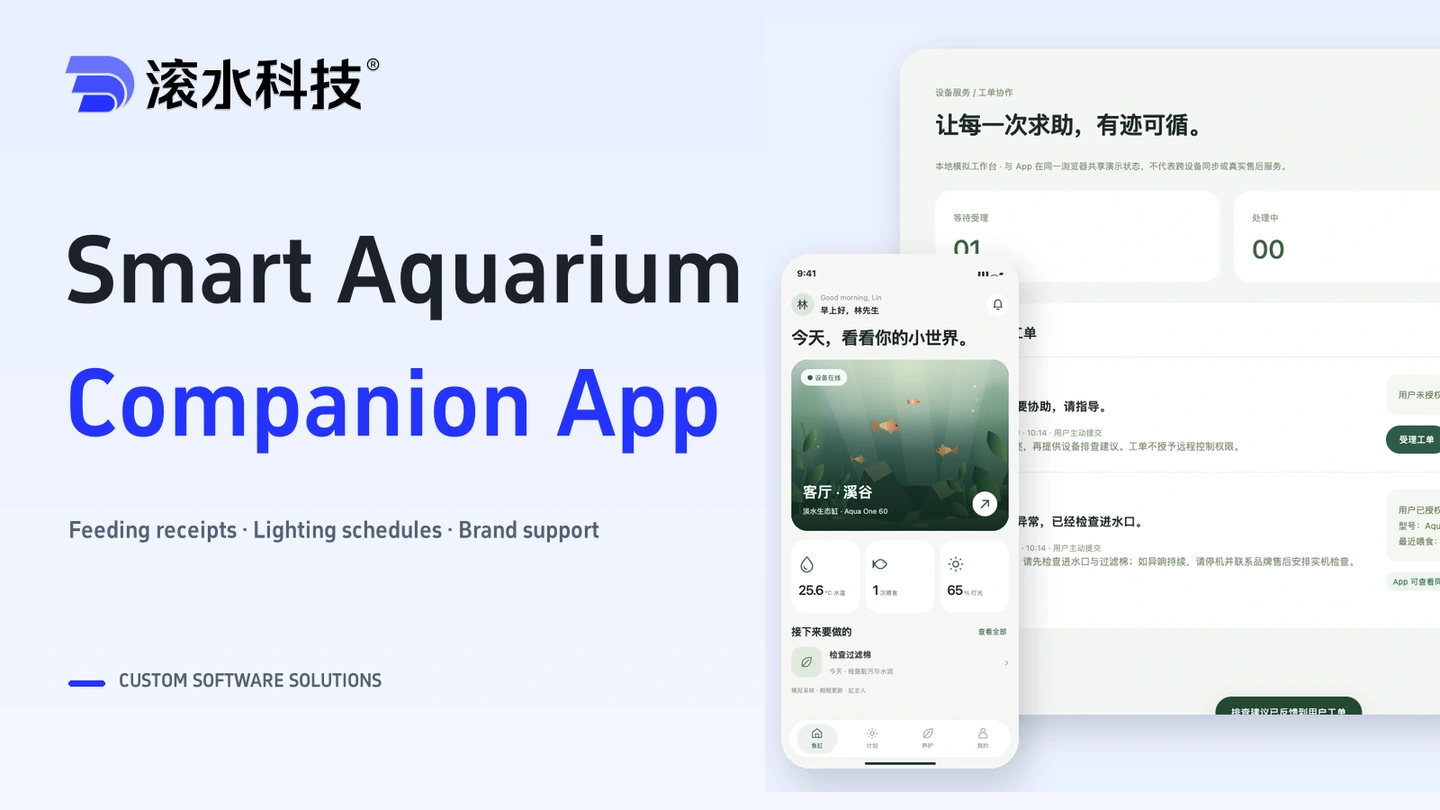
Connect device status, acknowledged feeding, lighting schedules, care records and consented support for aquarium equipment brands.
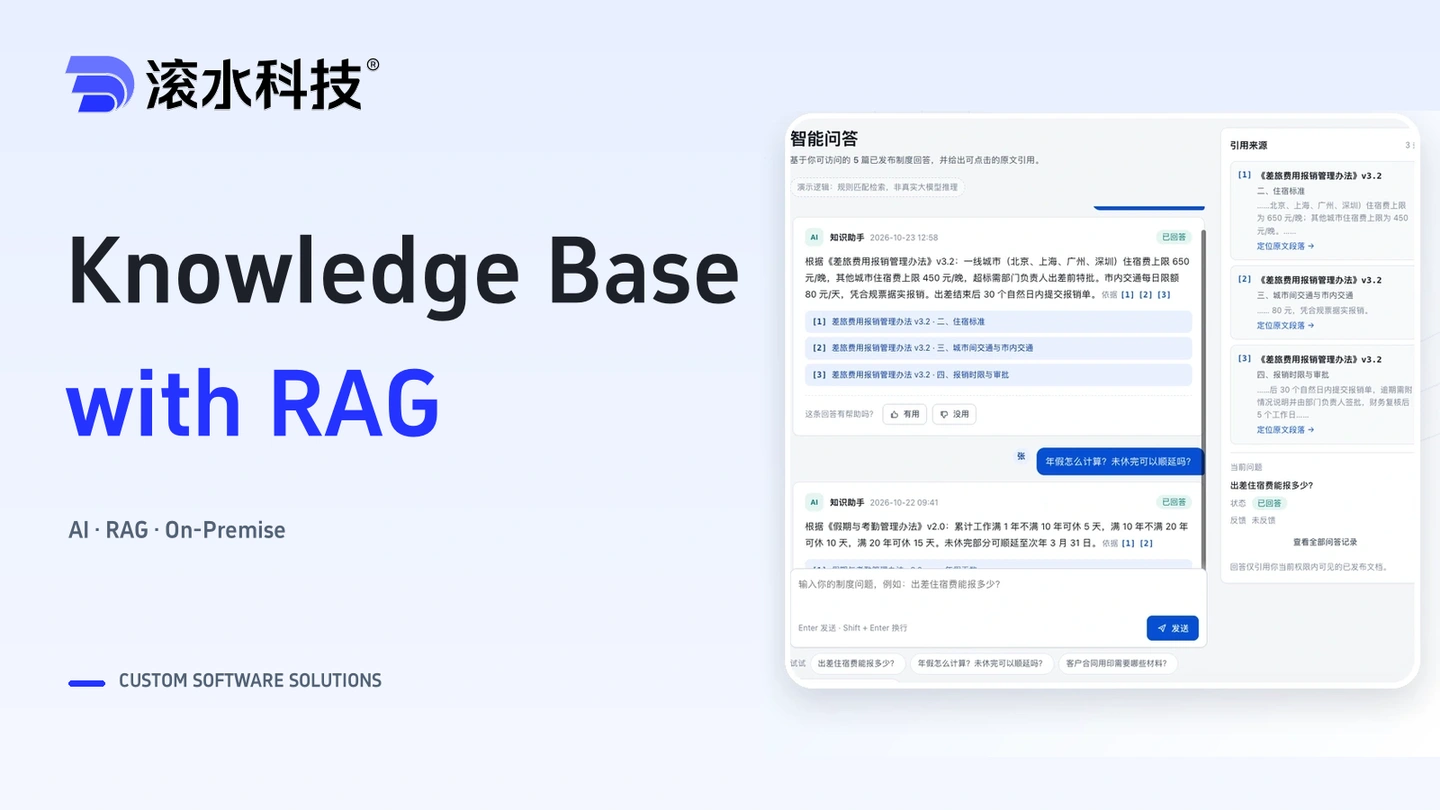
Connect enterprise documents and business knowledge with source citations and access controls. Start with a model API, or deploy processing, retrieval, and inference on an appliance for fully internal use.

Connect terminology checks, version comparisons, human review and project handoffs for bilingual financial documents, with traceable decisions and review records.