Create variations without losing the product
Link originals to SKUs, reuse brand presets and identify exactly which images need another attempt.
Turn product originals into traceable, approved image deliveries. Build a SKU-based workbench for e-commerce brands and agencies, connecting licensed image services with presets, batch processing and human review.
Each SKU can require several scenes, formats and review decisions.
China’s 2025 physical-goods online retail sales reached RMB 13.0923 trillion, representing 26.1% of total retail sales of consumer goods. This provides context for online merchandising; it does not establish a brand’s image workload or software budget.
National Bureau of Statistics of China, full-year 2025 figures published January 2026. Validate image volumes and procurement needs with the buyer.
Read the market and buying analysisLink originals to SKUs, reuse brand presets and identify exactly which images need another attempt.
Compare shape, color, packaging text and scene suitability against the original. Keep rejection reasons with each version.
Separate usable assets from unreviewed outputs. Evaluate accepted-image cost and choose integration or custom software only where justified.
Compare established tools, API integration and a tailored workflow.
Editing, presets and batch processing support product-image production. Its published Decathlon story illustrates catalog and asset-system integration. Confirm the required workflow and product-image quality through a scoped trial.
Subscriptions and API access are separate buying paths. Enterprise integration can address catalog links, naming and asset handoffs; scope the integration around the buyer’s existing asset workflow.
Official product documentationAdopt catalog links and reusable presets. Validate fidelity, data terms and service limits with actual samples.
Public tools cover background removal, upscaling, expansion, retouching, shadows and batch work. Its API offers a processing layer for an existing application.
Credit-based API usage requires matching operation types and request volumes to actual charges. Confirm application and API entitlements separately.
Official product documentationAdopt task-oriented entry points. Make failures, retries and allowance reconciliation explicit without assuming vendor quality claims apply to this project.
The official workflow starts with a product, extracted-text checks, templates or prompts, aspect ratios and quantities. Recent Images supports filtering and downloads.
Image allowances are sold through subscriptions; batch entitlements vary by plan. Test the standard application before commissioning a new system.
Official product documentationSeparate product records from output versions. Treat packaging text as product data and retain original-versus-output review.
| Buying path | Good fit | Confirm first |
|---|---|---|
| Established software | A small team with standard editing and scene-generation needs. | Plan entitlements, usage rights, output quality and data terms. |
| API integration | An existing product or asset system needs automated processing. | API rights, regions, fees, failure charging and write-back rules. |
| Custom workbench | SKU rules, brand presets, review ownership and delivery records need coordination. | A demonstrated workflow gap large enough to justify investment. |
A responsive web workbench supports desktop production and mobile review.
A product-centered workbench for image production.
The initial release covers originals, scene presets, batch jobs, review and accepted-asset export. A responsive web application serves authorized brand and agency teams; additional apps depend on a demonstrated need.
Desktop selection and production; responsive mobile access for viewing and review.
Connect SKUs, presets, jobs, versions and decisions. Export checks the latest valid approval.
Licensed services process images; authorized storage holds originals and outputs. Integrate PIM or DAM systems in stages.
Import authorized originals and confirm the SKU, product name and usable source quality. Preserve the original as the reference.
Block submission and explain the amount required. Production reconciles actual provider charging; demo credits are not a price quote.
Models create images. People verify products. Software manages the handoff.
Integrate authorized background generation, removal or expansion. Test reflective objects, transparency and fine print before committing.
Dimensions, naming, idempotency, versions and export eligibility belong in software rules.
Brand-appointed reviewers confirm appearance, labels, context and asset rights using originals and product records.
The interactive demo uses preset compositing rather than a live model. Validate image quality, product fidelity and publishing suitability with representative samples.
The browser submits settings; the server authenticates requests and checks limits. API keys and role enforcement stay on the server.
Map provider requests to local job items. Implement idempotency, verified callbacks, reconciliation and scoped retries.
Version originals, outputs and presets separately. Agree signed access, tenant isolation, retention and deletion before launch.
Review regions, data processing, commercial rights and applicable AI-labeling requirements. Preserve required metadata and processing records.
Service selection covers production access, processing regions, product-image quality, callbacks and billing. Confirm these conditions before integration.
Start with a controlled sample, then decide how far to scale.
Use brand-specific presets and review criteria for repeatable product sources. Route distorted products to rework or manual editing.
Initial samples: beauty and household productsOrganize client projects and delivery manifests. Add cross-client permissions, invitations and billing only when scoped.
Extension: project permissions and handoffsConnect jobs and reviewed outputs to PIM or DAM records. Map SKUs and versions, starting with a limited catalog.
Extension: catalog and asset APIsSegment by transparency, label detail, color and scene risk.
Include queueing, human review and rework, alongside processing time.
Include retries, rejected outputs, storage and labor; account for development and maintenance separately.
The intended benefit is less repetitive setup, asset searching and handoff work. Measure released hours, conversion impact and realizable cash savings separately in your pilot.
Supply licensed images, SKUs, brand rules, target channels, review ownership and integration details. Confirm the image-service account and region.
Test difficult materials and packaging text. Agree acceptable scenes, fallbacks and review thresholds.
Deliver assets, presets, jobs, review and approved export. Test unauthorized actions, duplicate callbacks, retries and approval invalidation.
Review acceptance rate, delivery time and unit cost before adding tenants, catalog write-back or more categories.
Start with commercially available services and validate them through samples. Dedicated training, if justified, requires a separate review of data rights, budget and technical feasibility.
Generated outputs alone cannot provide that guarantee. Preserve originals and review shape, color and labels. Reject unsuitable outputs or use manual editing.
Keep an established tool when it meets the need. Custom development is justified by specific SKU, preset, approval, permission or integration requirements.
No. It uses browser-based preset compositing to demonstrate import, batch processing, review and export. Live AI requires an authorized service and sample validation.
Bring sample images, monthly volumes, target channels and your existing tools so we can scope a useful first release.
Related solutions
AI, capital-markets docs, OCR, vision, IoT and membership operations — composable for your industry.
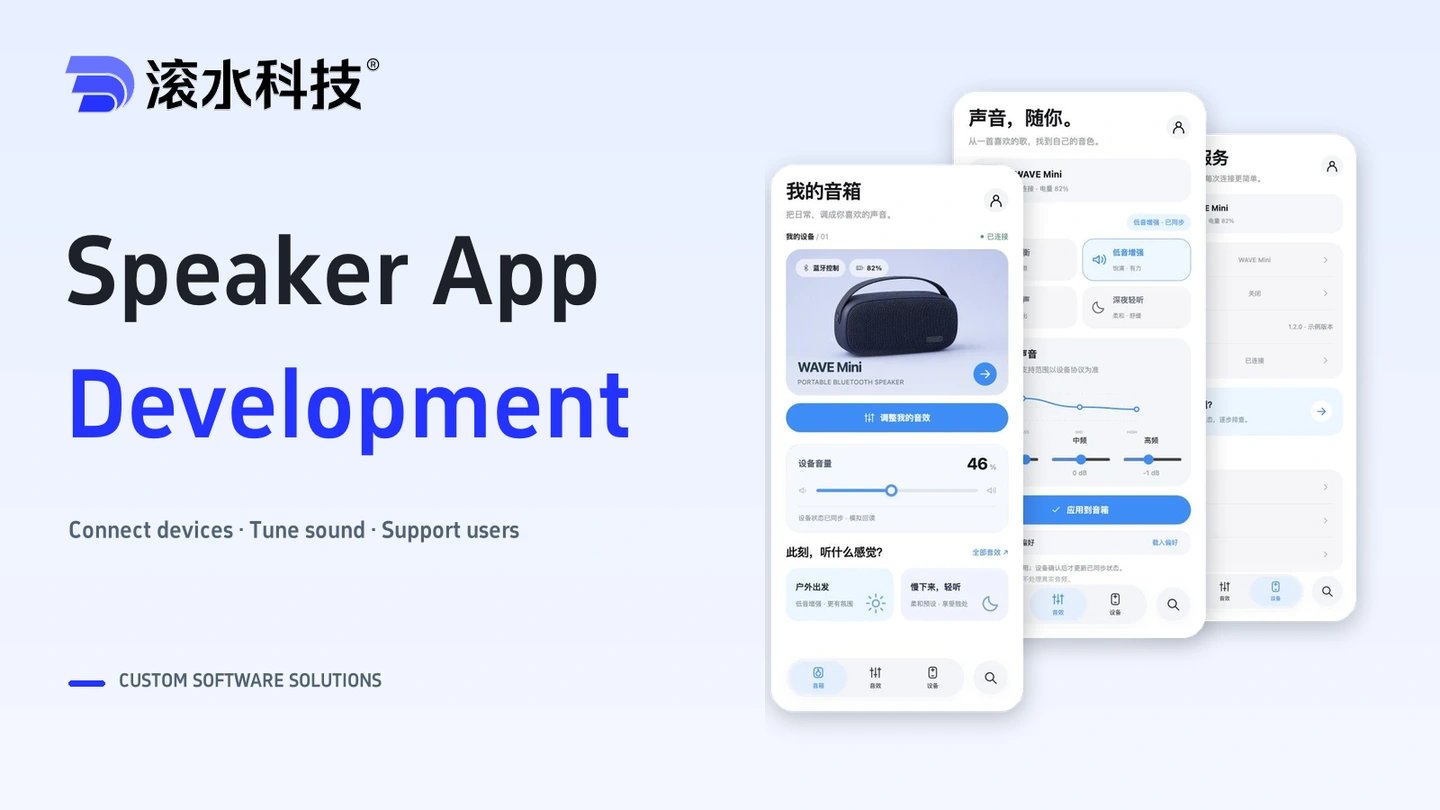
Build a branded iOS and Android experience for speaker discovery, device controls, sound settings and support. Integrate your authorized hardware protocol with clear feedback for every connection and setting change.
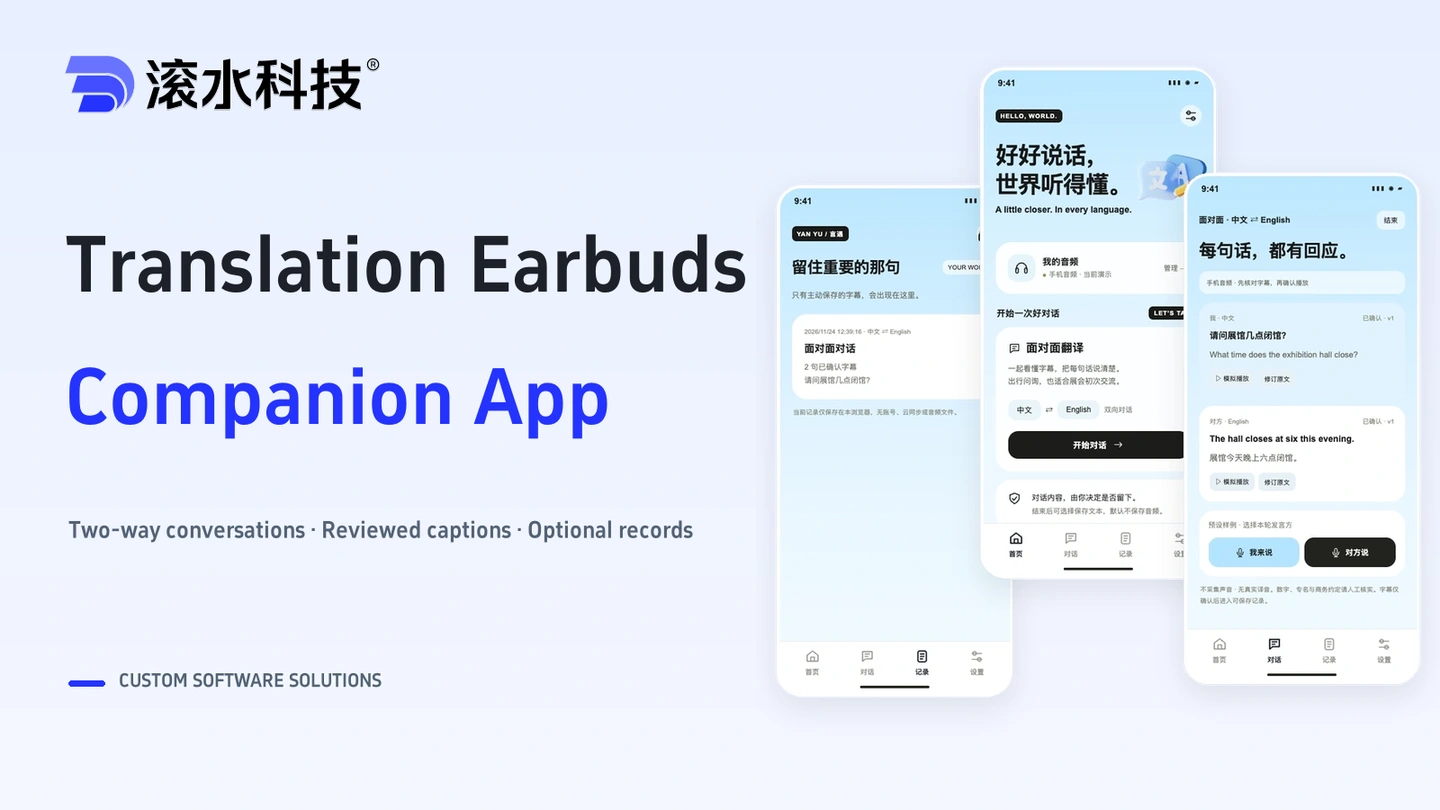
A branded companion app for turn-taking conversations, reviewed captions, clear audio routing and optional records.

Connect device status, acknowledged feeding, lighting schedules, care records and consented support for aquarium equipment brands.